tasdid.dev
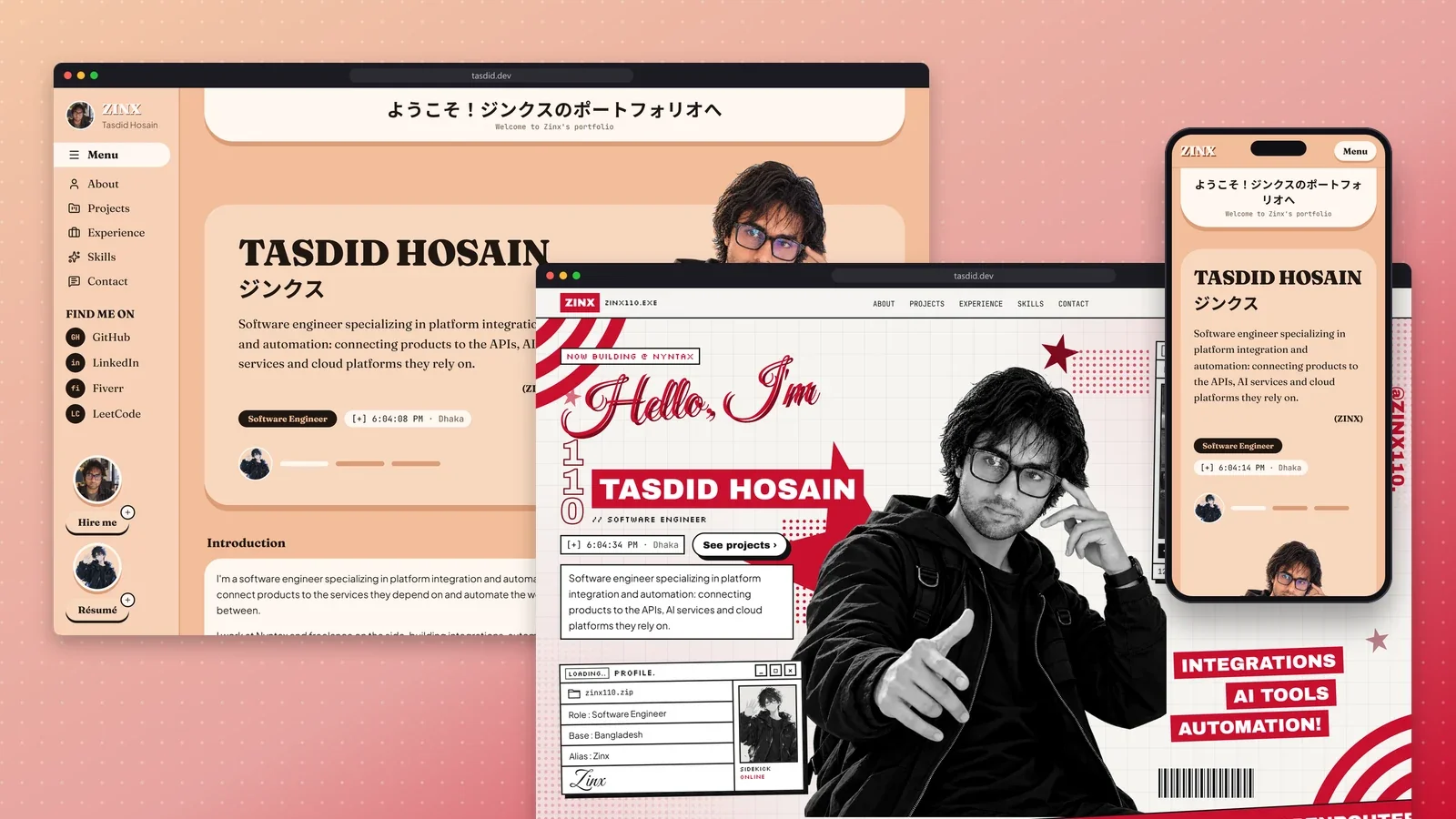
My portfolio, built as a product: two swappable designs, a tailored version for each application, tracked links with phone alerts, privacy-first analytics and an installable admin app.
The problem
A static portfolio says the same thing to everyone and can't tell me whether anyone read it.
On this page (9)
Context
Most portfolios are a static page: the same words for every reader, edited in code, with no idea whether anyone read them. I wanted mine to work like a product. Something I can update from my phone, tailor to each application, and that tells me when a recruiter actually opens it.
Goals
- Edit without deploying. Projects, posts and the résumé come from a database and a dashboard, not from code.
- Tailor per reader. One link per application, with its own intro and the projects that matter to that role.
- Know what happened. First-party analytics and an alert when a shared link is opened, without tracking anyone creepily.
- Stay fast and safe. Every deploy is tested in a real browser and scored by Lighthouse before I trust it.
One site, two designs
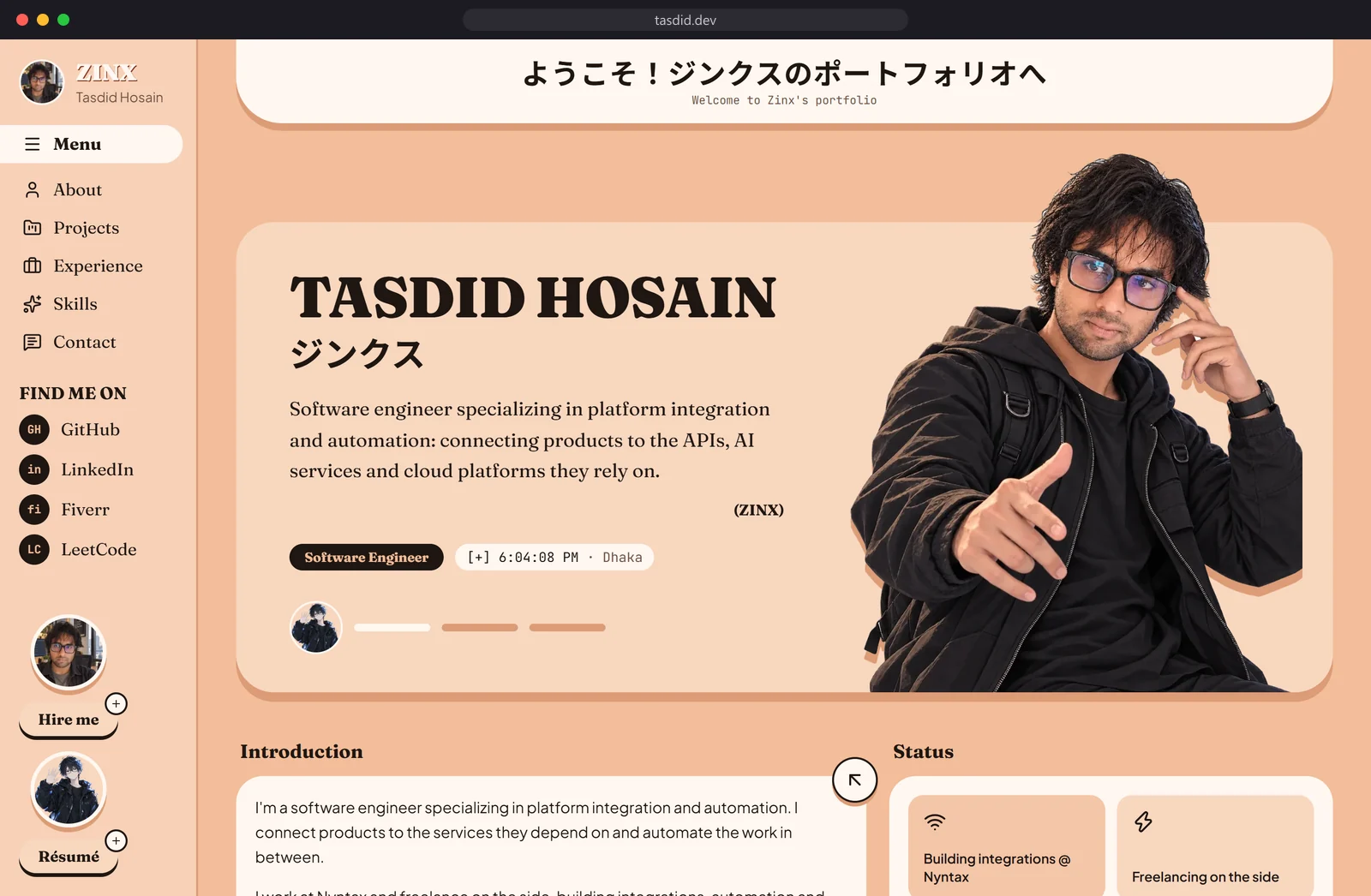
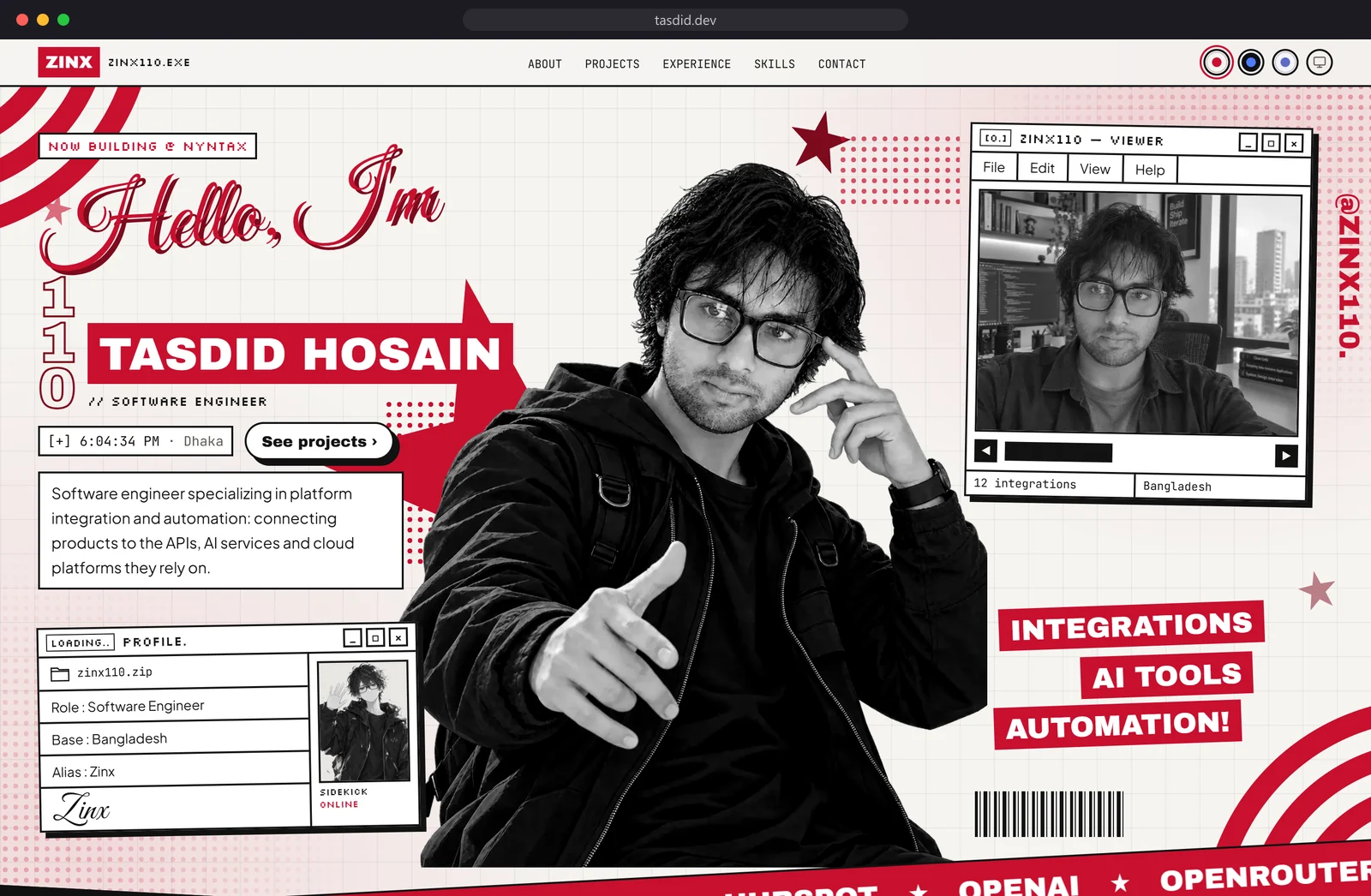
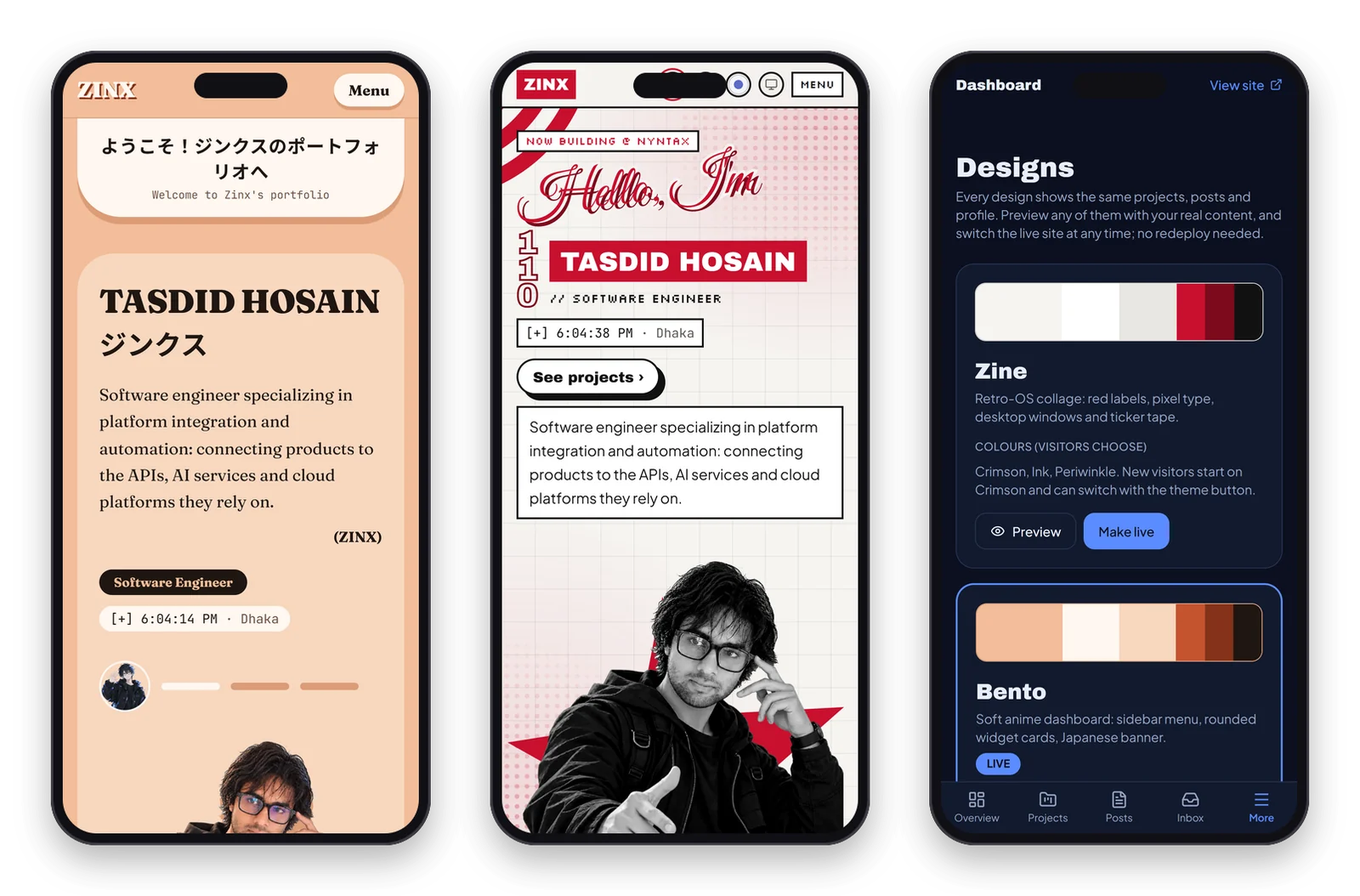
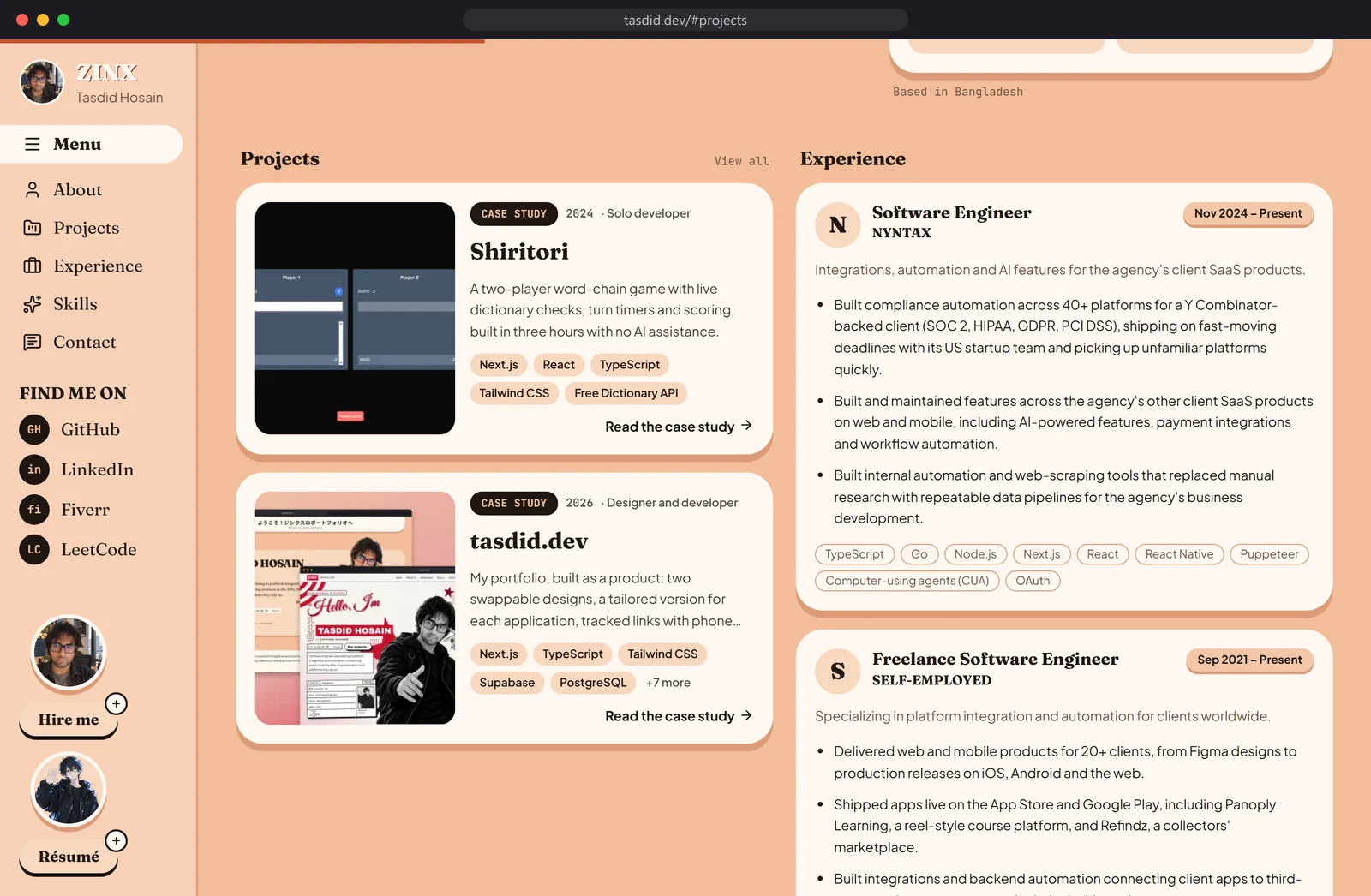
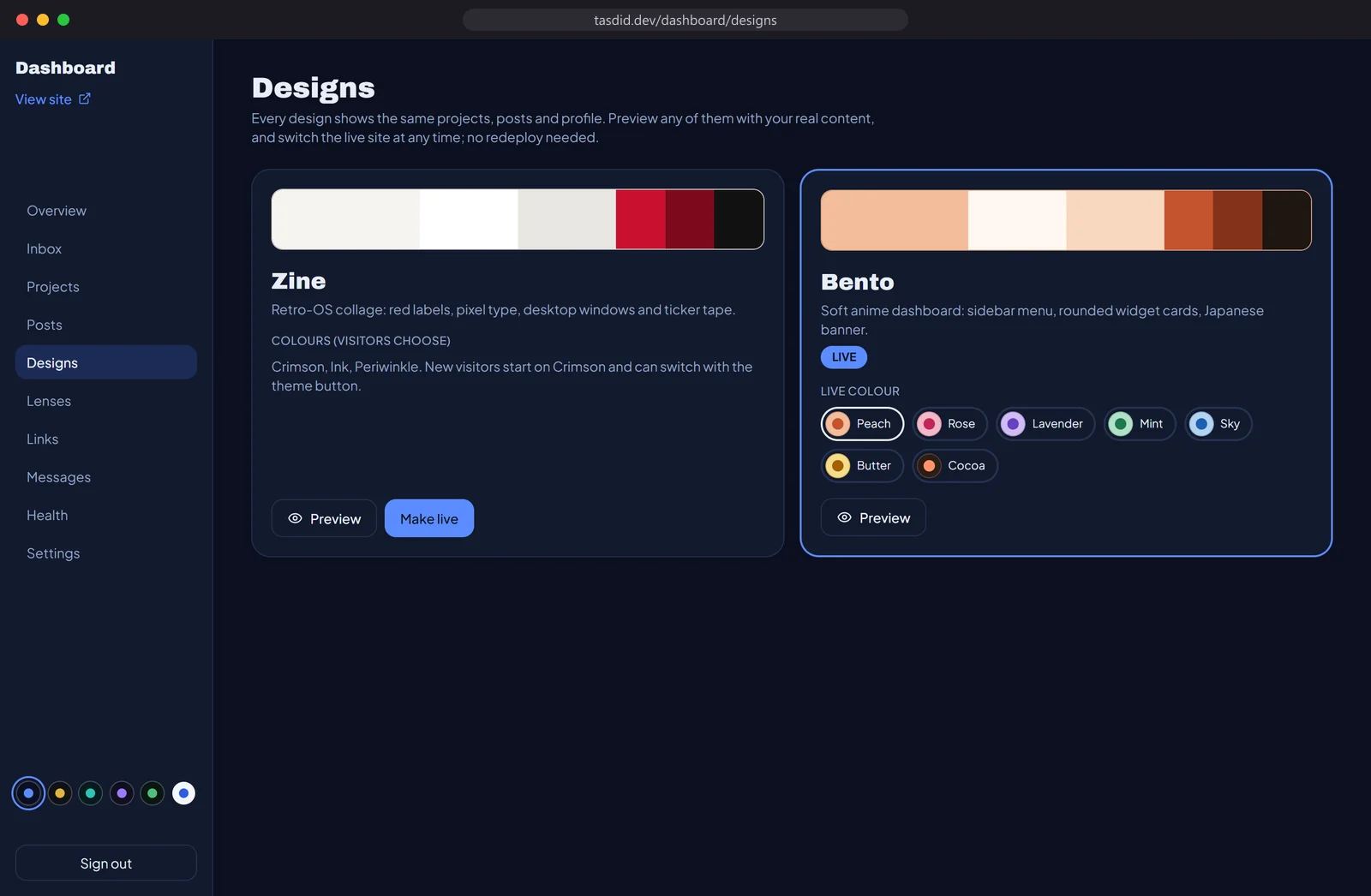
Every design gets the same data through a small contract (seven page components and a set of fixed shapes), so a design only renders and never queries anything. Zine is a retro-OS collage with stamped labels, pixel type and desktop windows. Bento is a soft dashboard with widget cards and a Japanese welcome banner. I switch the live one from the dashboard, with no redeploy, and each has its own colour palettes.
Both are built mobile-first, and so is the dashboard: it installs as an app on my phone.
A version for each reader
A lens is a tailored home page: its own headline and intro, a hand-picked set of projects, a section order and optionally a palette. A tracked link (/l/<code>) can carry a lens, a source and the person it was sent to. The first time it's opened, my phone gets a push notification, so I know the recruiter read it, and which version they saw.
The projects section uses the same cards everywhere: cover, role and tech stack, with the whole card clickable.
Writing from the dashboard
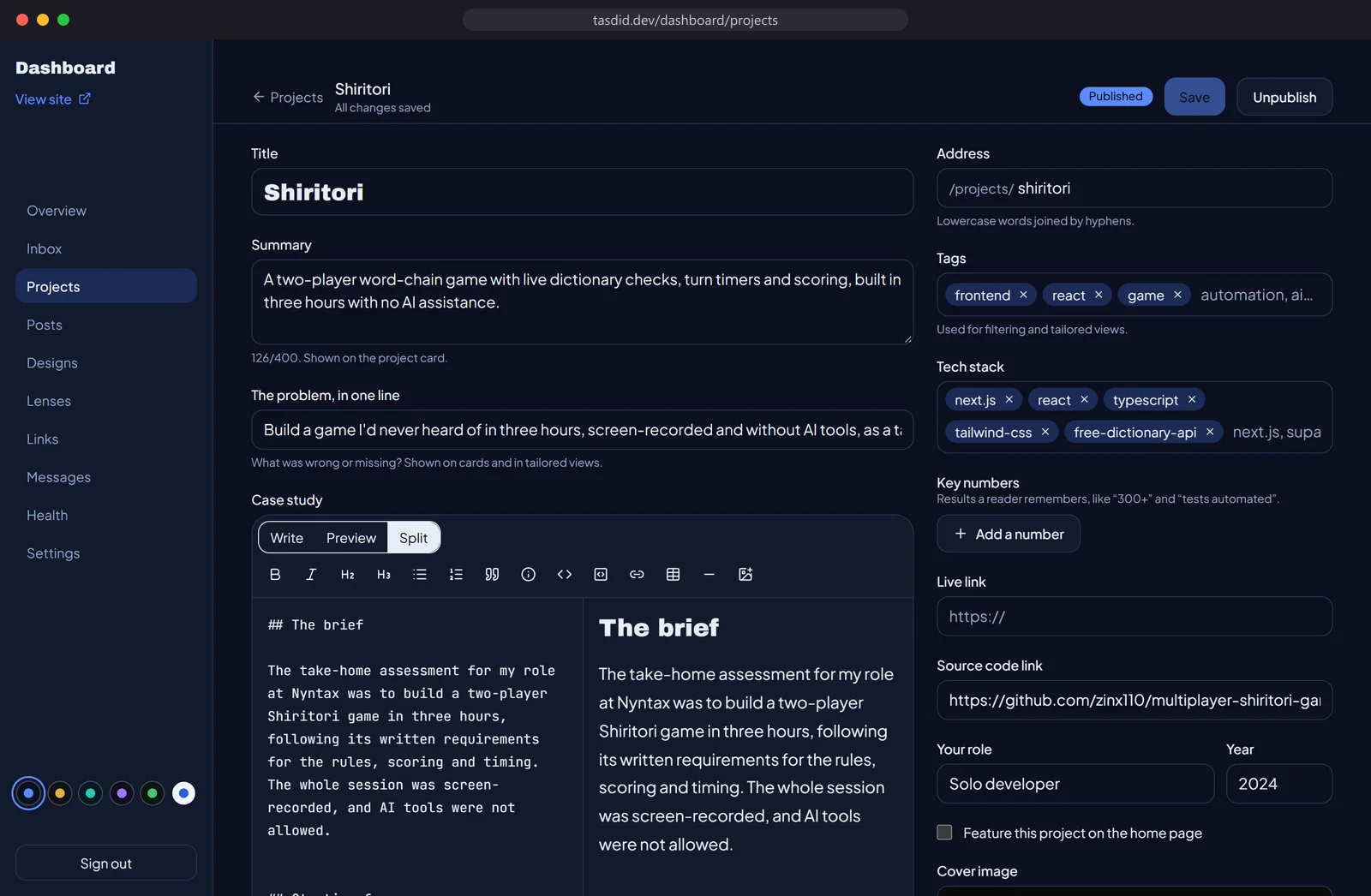
Projects and posts are written in a markdown editor with a live preview. Drafts autosave as I type, every save is kept in a version history I can compare and restore, and images are converted to WebP in the browser before upload (which also strips location data from phone photos).
A résumé that writes itself
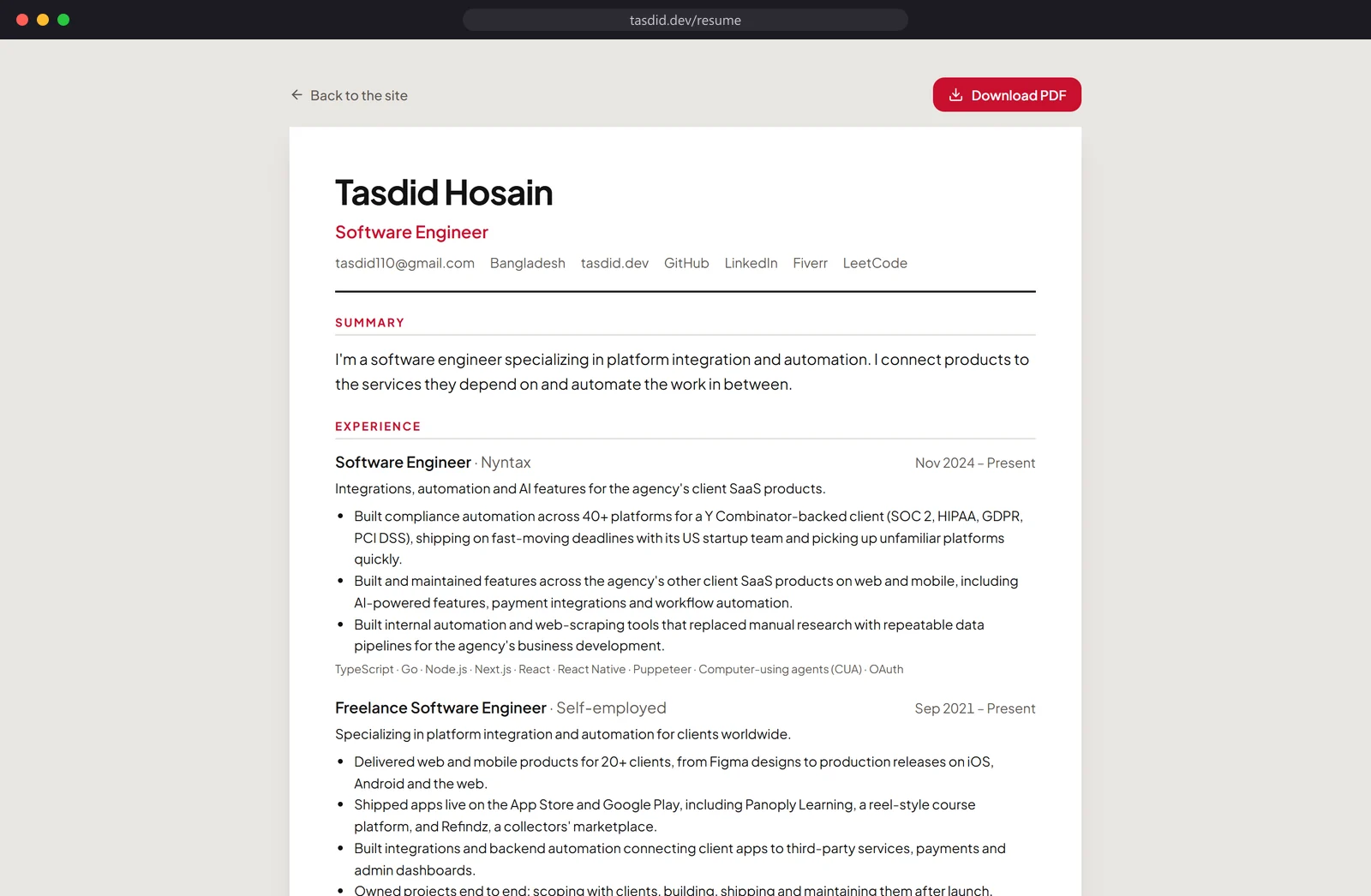
The résumé isn't a separate document to keep in sync. It's generated from the same experience, skills and projects as the site, as a web page and as a real PDF with selectable text. A lens tailors it too: its intro becomes the summary, and its projects and skills move to the top.
Analytics without being creepy
Visits are recorded by the site itself, not a third-party tracker. Raw IP addresses are never stored, only a daily salted hash, and my own devices are never counted. Link scanners and preview bots that pretend to be browsers were showing up as "visitors" from data-centre cities, so a visit now counts only after a sign of a person: a scroll, a click, a key press, or ten seconds on the page.
Shipping safely
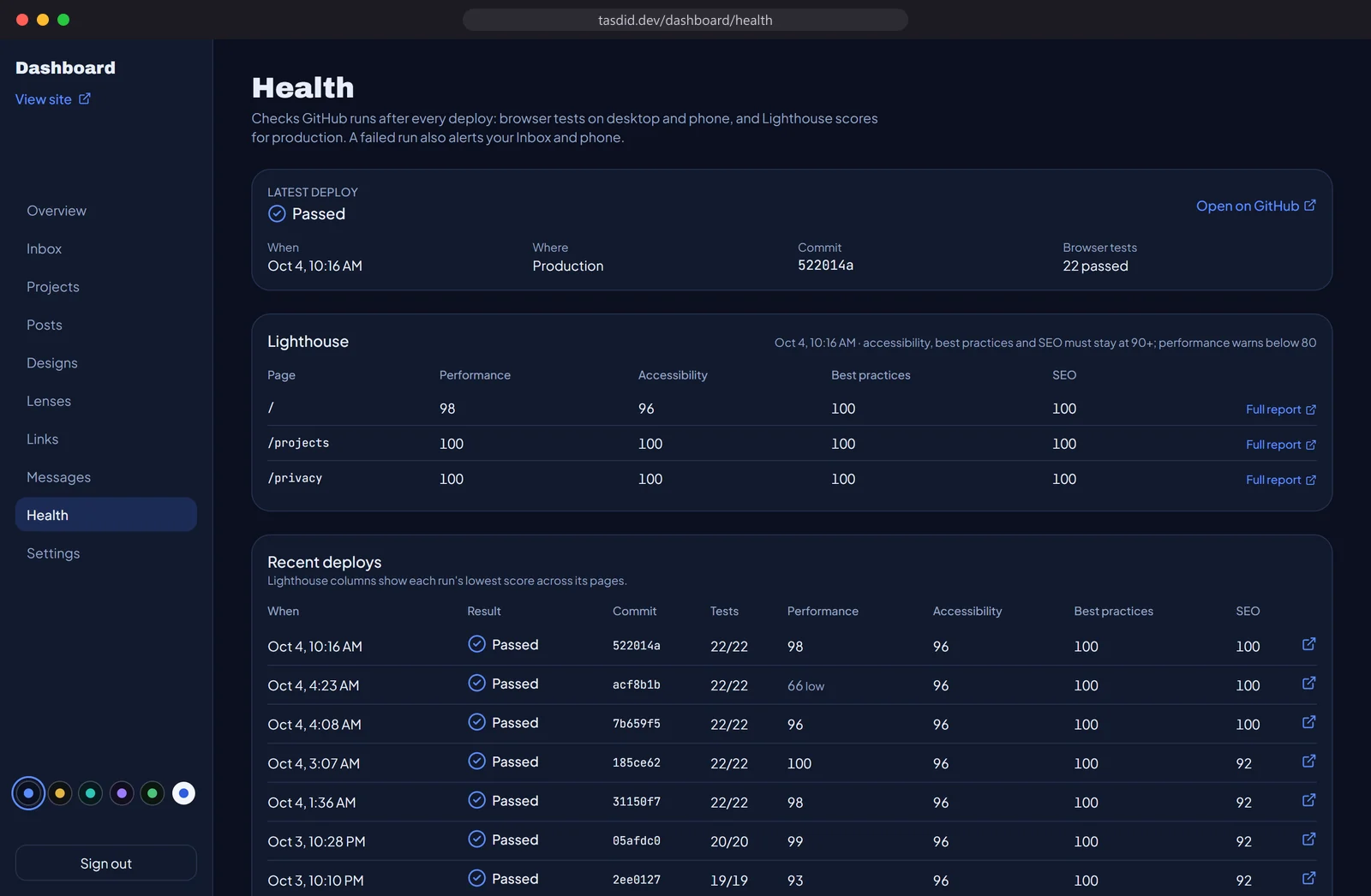
Every push runs the type check, lint and the full unit-test suite. Every deploy then runs 22 browser checks against the live site, on desktop and phone, plus Lighthouse on the key pages. The results land on a Health page in the dashboard, and a failed run alerts my phone.
Pages are prerendered and cached, and saving content invalidates exactly the pages that use it, so edits go live in seconds without a rebuild. Scroll animations never delay the first paint: the hero keeps a CSS animation, and everything below it animates only once it's on screen.
Reflection
- Content first next time. I built the platform before writing the case studies it exists to show. The tools are ready now; the writing is the next job.
- Measure what matters. Bot traffic taught me that a "visitor" needs a definition. Counting a visit only after a sign of a person made the numbers smaller and much more honest.
- Next: an "Ask me anything" assistant that answers questions about my work using only what's on this site.